
The Shape of What Remains » Entries
March 21, 2026
The sliding doors part and a wall of heat pushes against me — the concourse exhaling its recycled warmth into air that has no business being sixty-three degrees in March. Hot and cold duel at the intersection of interior and exterior where I’m caught between them, neither in nor out, neither leaving nor arriving, neither seeking nor lost, standing in the seam where one season presses against another. Then I step through, and the cold falls away behind me like a coat I didn't know I was still wearing. I shouldn't have been wearing. I didn't need wearing.
Inside, the concourse hums — but not the anxious low rumble of departures. That's a different part of this complex with its security checks and rolling luggage and faces tilted toward screens as if the gate might change if they stop watching. This end is different. This is arrivals. The energy runs on a different kind of physics, one of joining rather than separation. Not scattering, but collecting. Every body in this room is oriented the same way, leaning toward the same corridor, waiting for familiar faces to appear, filling the temporary emptiness. The whole space holds its breath with those on both sides until that moment of reunion, where a great sigh fills the air.
I find a seat near the barrier. The flight board says twenty minutes. There's nothing to do but watch. And watching, it turns out, is contentment in itself.
A woman in her sixties has stationed herself at the front of the small crowd. Hands clasped before her, steady as a churchgoer, holding something invisible in place. She hasn't moved in the ten minutes I've been here. Her eyes don't leave the corridor. She doesn't check her phone. She doesn't adjust her coat or shift her weight or glance at the clock. She simply stands, and waits, and watches the opening where the passengers will appear — as though looking away, even once, might break whatever thread connects her to whoever is coming through. There is a kind of devotion in stillness like that. A discipline of presence most people never learn, let alone practice, and she has perfected it flawlessly.
Behind her, a young man paces a slow, tight circle as if he was waiting for his own permission to land. Phone, corridor, phone, corridor. His body hasn't decided what to do with his hands. Pockets, out, arms folded, dropped. Whatever composure he arrived with has dissolved into the raw machinery of anticipation — the gears turning visibly now, the face trying to manage what the body has already given away. He reminds me of someone. Everyone waiting reminds me of someone.
Two children on a nearby bench kick their legs in tandem, metronomes of impatience, asking their mother questions she answers without turning her head. When is Daddy coming? She touches the older one's hair absently — a gesture that has nothing to do with the question and everything to do with the waiting. Her hand knows what her voice won't say: soon, soon, soon.
And then it happens. The thing the whole room has been holding its breath for.
Someone appears in the corridor. Someone recognizes. And then another. And another.
A hand goes up. A face breaks open with a beaming smile. And this room between worlds exhales, exclaims, and exults.
The woman in her sixties sees her daughter — it must be her daughter, the resemblance arrives before the recognition does — and both hands come up to cover her mouth, as if the joy is too large for her face to hold without help. Her shoulders shake once, a single tremor passing through the stillness she held so perfectly for so long. She doesn't move toward the corridor. She lets her daughter come to her — and that restraint, that willingness to wait even now, even with the finish line in sight, tells me everything about the kind of woman she is and the kind of love she carries. When the daughter reaches her, the embrace is unhurried. Firm. The kind that closes a distance that was never really about miles. The kind of knowing that can span any distance.
The man in the rumpled suit drops his bag — just releases it, mid-stride, hands suddenly remembering what they're actually for — and scoops up a small boy who has broken free from someone's grip and is running full tilt, arms wide, face incandescent with the unselfconscious joy that only children and the very old still have access to. The boy wraps around his father like he's been rehearsing this hold since the day the suitcase was packed. The man closes his eyes. The crowd parts around them like water around stone, and no one seems to mind the obstruction. No one should. Some things deserve the space they take. Some loves earn their expression.
Two young women collide near the barrier, laughing and crying simultaneously, one nearly losing her balance, the other catching her, both talking at once, neither listening, and it doesn't matter because the words aren't the point. The collision is the point. The sound they make together — half-laugh, half-sob, entirely unself-conscious — is the sound of something the room was missing suddenly being put back where it finally belongs. Finally home.
I watch. I can't help but smile. The whole arrivals hall has become a catalogue of what the human body does when it encounters what it's been waiting for — the hands that don't know where to go, the faces that can't hold what's arriving, the running, the stillness, the way gravity seems to reorganize itself around two people who have found each other in a crowd. Every reunion is different. Every reunion is the same. The specifics vary. The shape is —
Stop cataloguing. Just watch.

And then an elderly couple.
They come through the passageway together — not one arriving to the other but both arriving to whatever comes next, her arm through his, walking slowly toward the exit as if the exit were not a destination but just the next step in a stroll they have been taking together for forty years or fifty or some number that stopped mattering long ago because the counting was never the point, the connection was the point, the arm through the arm was the point, his pace adjusting to hers without looking down because his body learned her rhythm so long ago that the adjustment is no longer adjustment but simply how he moves through the world now, and she tightens her grip as they approach the door — a small preemptive steadying, a gesture so practiced it has become invisible to both of them, the way breath is invisible to the lover's ear, the way the tide is invisible to the shore that has forever received it — and he accepts it without acknowledgment because it's just what she does, it's just who and how they are, and this is what it looks like when two people have stopped performing love and simply become it, when the whole machinery of anticipation and reunion and collision that fills the rest of the hall has been replaced by something subtler and more permanent, something miraculous in itself that doesn't need the drama of arrival because it never left, something that just walks, arm in arm, toward the sliding doors and the unseasonably warm air of an ordinary afternoon waiting on the other side.
No tears. No collision. No face collapsing with what overwhelms.
Just the quiet certainty of two people who belong to each other, without beginning or end. Moving like one body that happens to have four legs and two hearts and a single direction.
I feel the joy in their eyes welling behind my own. Not grief. Not envy.
Just recognition.
And I smile. The shape is ancient. Timeless. And it can never be lost.
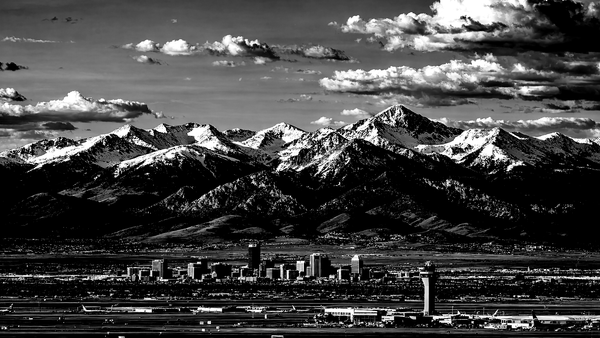
Somewhere beyond this concourse, the mountains still hold snow. Down here, people are shedding layers they thought they'd need, adjusting to what the air already decided weeks ago. The season turned while no one was watching. They do that. And then you look down and realize you're dressed for weather that has already passed.
I've been dressed for winter for a long time. Decades, perhaps.
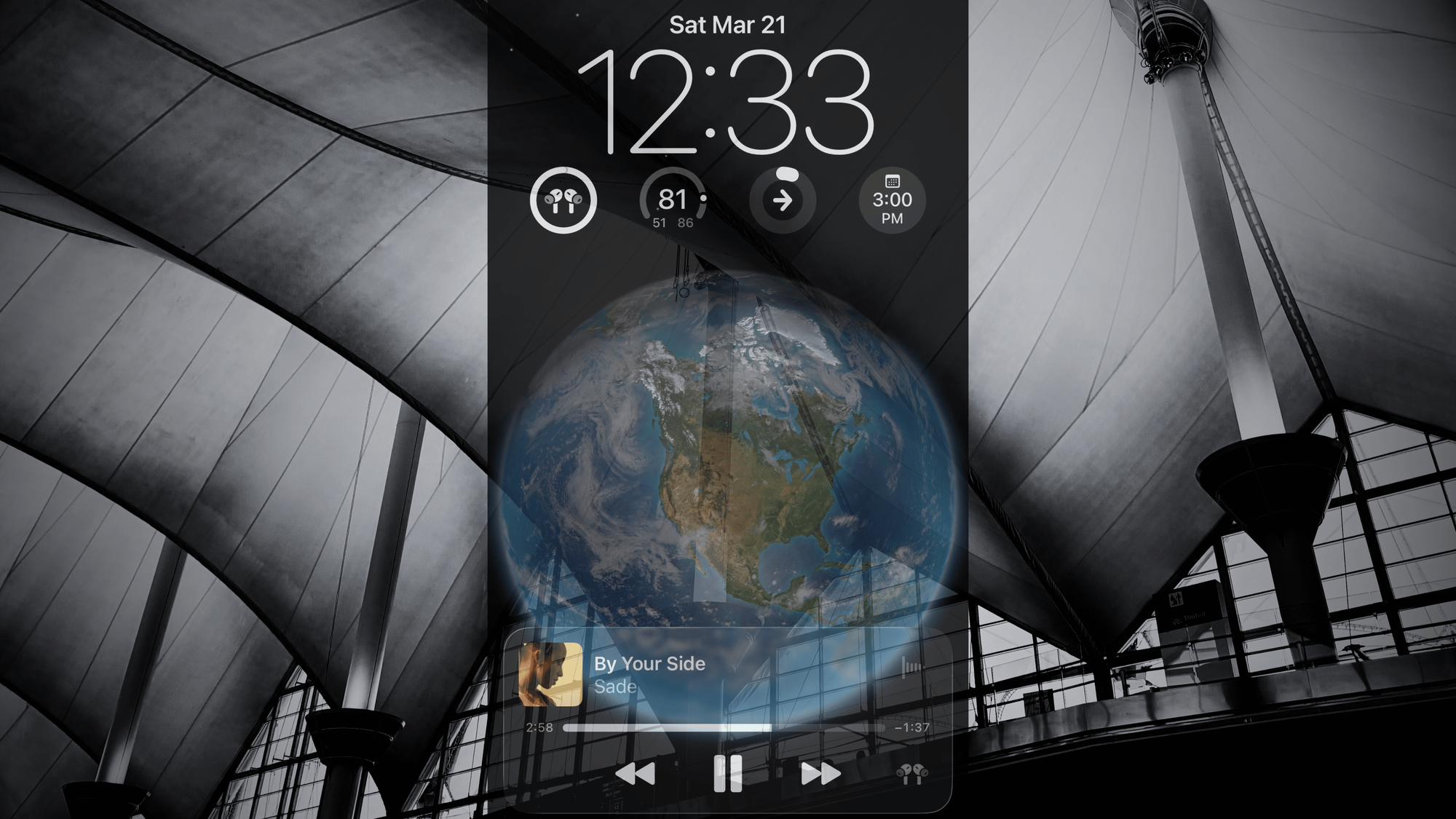
Above me, the white peaks of the concourse rise like frozen sails — pillars of conveyance, built for passage, not permanence. No one lives here. Everyone is arriving or departing. Below the peaks, the crowds flow and change. The woman in her sixties has left with her daughter. The rumpled suit is somewhere outside waiting for a ride sahre, a small boy asleep on his shoulder. The elderly couple is already in a car, her hand on his arm because that's where her hand belongs—always.
And the concourse building stands like a temple to this convergence of souls, presiding over an endless parade of faces in reunion. The form persists while everything within it moves — while a girl runs toward her mother and an old man adjusts his pace and a woman covers her mouth with both hands because the joy is too large and too sudden and too real. Love of all shapes and sizes and seasons.
Yes, seasons change.
And I'm learning to let them.

 Dean Bowman
 Dean Bowman
Written by