

The Shape of What Remains » Entries
December 23, 2025
It's funny the things that jar my memory. Always the little things. Like the taste of the rice in my tuna-mayo onigiri. The sounds of an empty train platform late at night in Kasumori-cho. The chill of the early morning air on my face as I walk a dilucular, foggy backstreet in Tsubaki-cho.
And it isn't just the little things. It's odd things too. Like the texture of the ceilings of the unit baths across the country. The eerie orange light of sunset behind the Yoro mountains in December. The strangely purifying smell of 稲藁焼き smoke near Kaizu in late October. An odd mix of fondness and familiarity of unrelated things scattered over time and place. In memory, distance and association are relative.
Those are my thoughts as I wait for the 7:01 am Nozomi for Tokyo. Somewhere in my head, unbidden, the sound of Chage and Aska emerges—a song I haven't thought about in years. But today it feels inevitable, its melody fresh—already scoring the journey before I've even boarded.

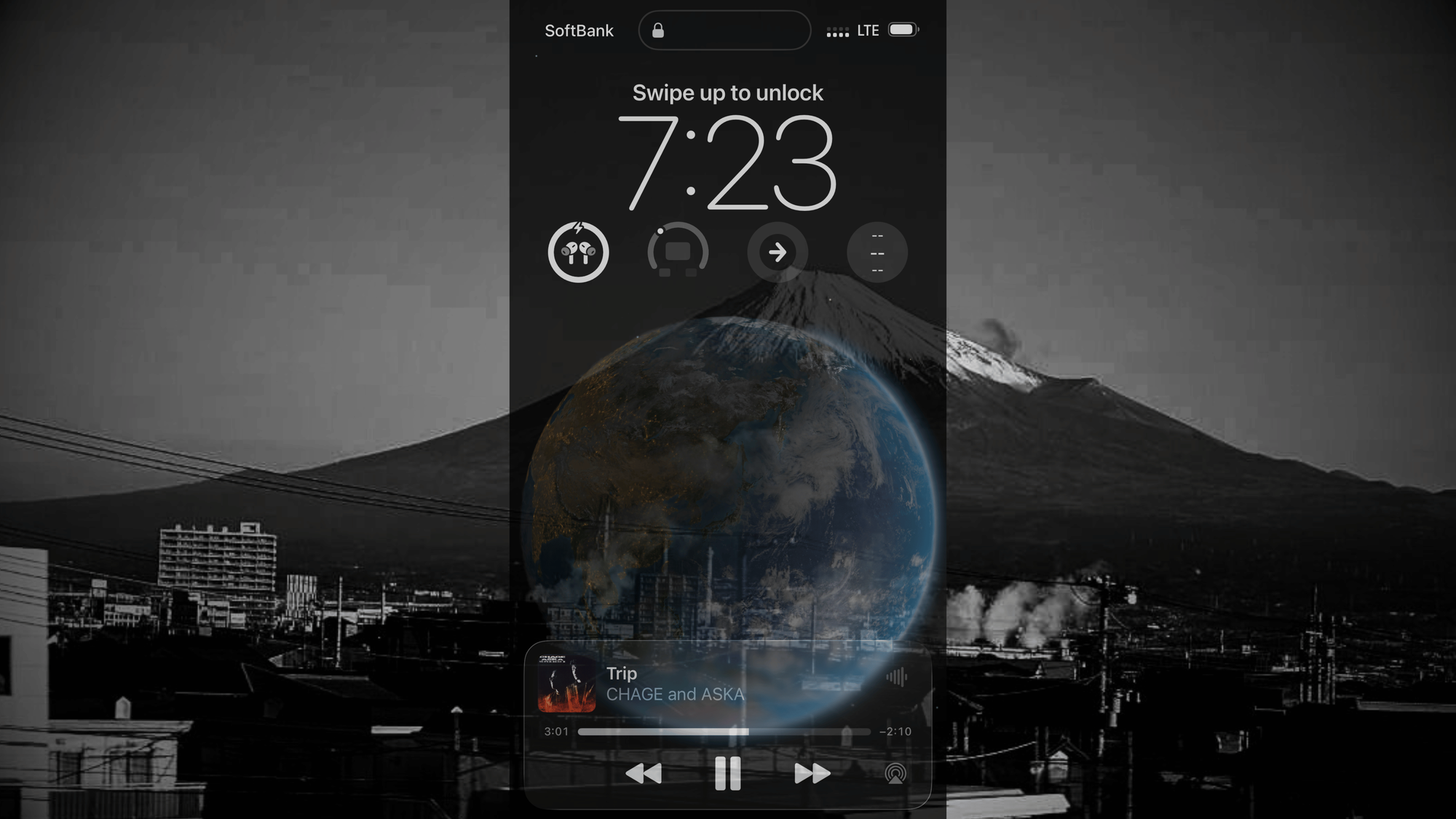
The train ride filled me with anticipation. My reflection in the window—a ghostly silhouette at sunrise superimposed over the passing landscape. '92. '04. '15. Today. The same face, different lines. The same places, different years. The song's melody running underneath my thoughts:
心の隅にある 守れない場所
言葉のやさしさで 崩れ始める
そこからは 入れ替わる
シルエット
This is what return feels like. Not a straight line but an overlay. Layer upon transparent layer. Translucent images never quite aligning. Silhouettes transposing over the decades.
I've only just thought of this fact as the blurring landscape whips past my window: the Nozomi runs at 170 mph—slower than a commercial flight—but carries 1,320 passengers. During peak periods, the Tokaido line runs 12 Nozomi trains per hour, moving roughly 16,000 passengers. Across all services, that's over 400,000 passengers daily, a volume impossible for any airport to match. And to think I took this all for granted for so many years.
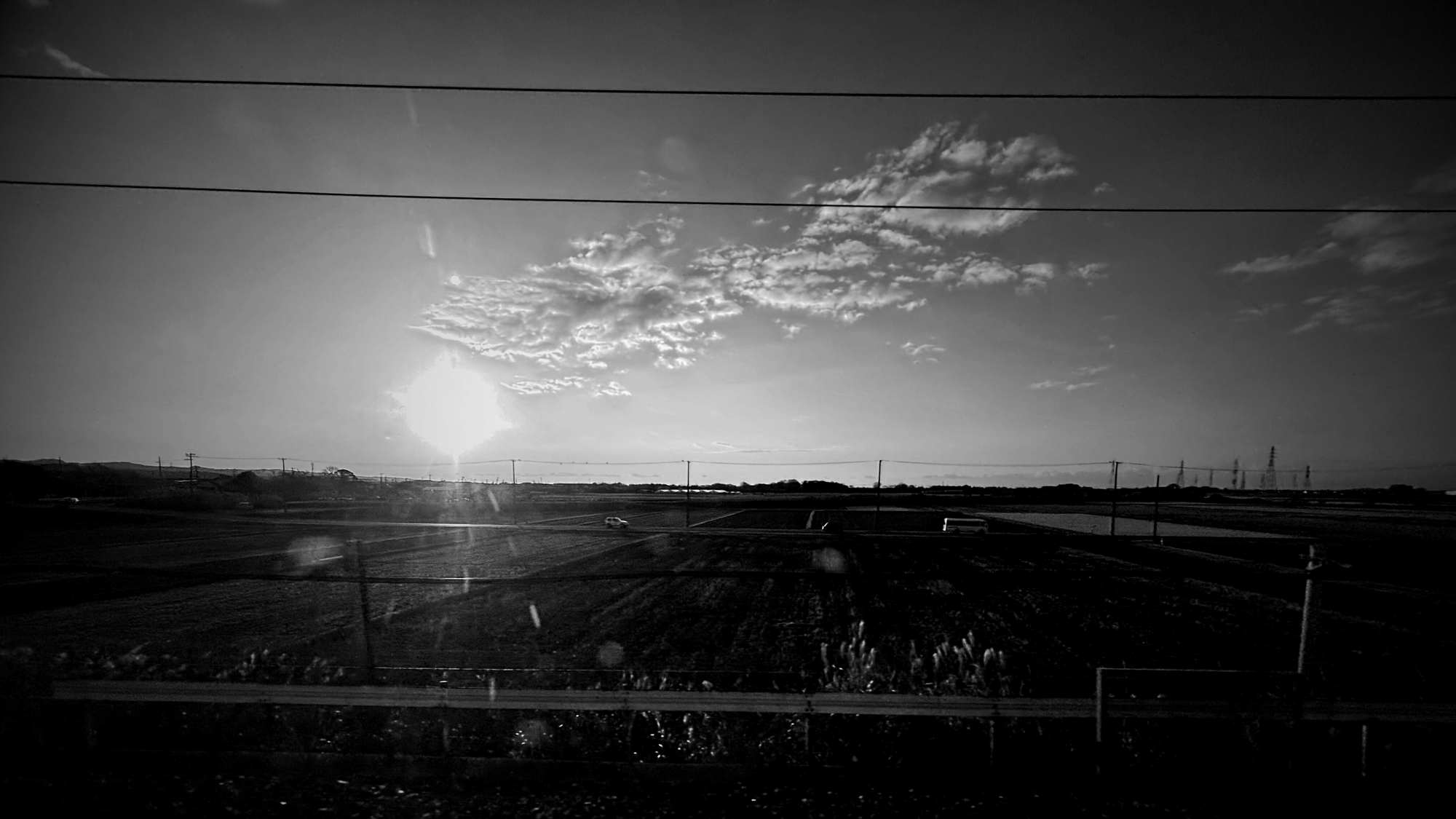
I close my window shade as the rising sun bathes the car in bright, butter yellow light, closing my mind to the countless silhouettes just beyond.
Lunch in Otemachi, Chiyoda-ku, Tokyo. A posh lounge near Metro Square.
A small gathering of seven who have known each other almost our entire lives.
How our conversations have shifted from those of budding careers and raising our children years ago to our now elderly parents, personal battles with chronic illness, and planning places to rest during our visit today to stave off aching feet. The sort of things you'd never think of in your twenties but are a daily fact of life in your fifties.
As we dine, I see us as we were when we were young. Laughing at a bōnenkai 30 years ago. It's as if the years melted away and we were now as we were then. There is no word I can think of to describe this state of being—this utter and total immersion that transcends time and space, dwelling only within the deepest heart of hearts, the purest soul.
And yet. The comfort of shared memory, of being known across decades, sits juxtaposed alongside the unsettling incoherence that age brings. The way our lives have scattered and reformed in patterns none of us could have predicted. We are the same people and entirely different. Both realities exist simultaneously, like my transposing reflection in the train window—present and spectral all at once.
Though Chiyoda is in some ways the heart of Tokyo, it was never my first choice for socializing. I had always preferred Shinjuku or Ginza. But it was close to home for the organizing member of our group, and we had a wonderful time, talking late into the afternoon.
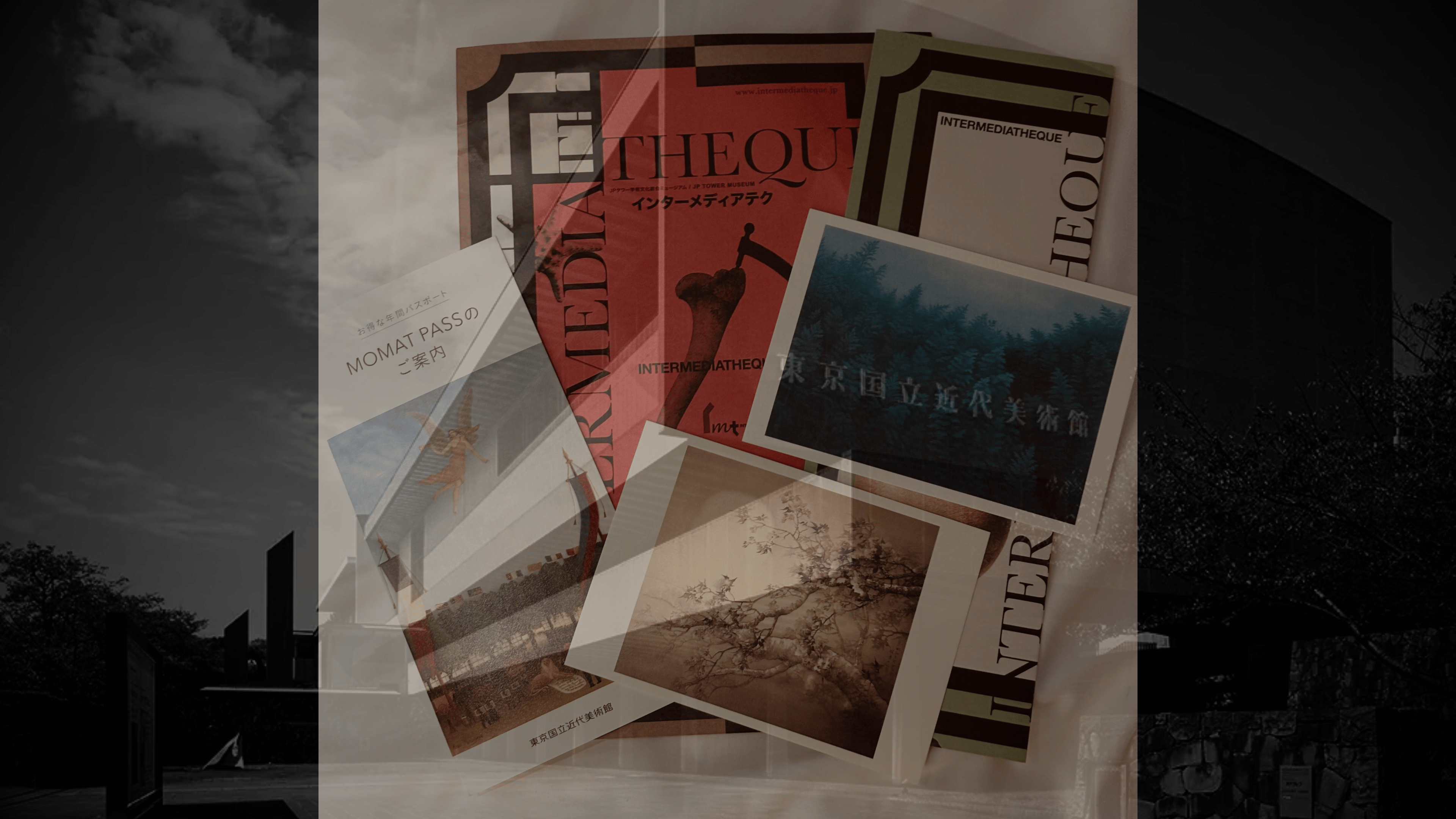
We parted ways just after refreshing ourselves by walking the grounds of the Imperial Palace, some heading back to their homes nearby, while two others headed to THE ALFEE concert at Budokan. I slipped away into the 東京国立近代美術館 just up the road.
I drifted through the MOMAT gallery slowly where I could, letting the shrinking afternoon linger. Kitano Ken's "Our Face" series grabbed me—those composite portraits built from hundreds of individual faces, each person present yet dissolved into the collective. Faces and bodies inhabiting the same space. I thought of my friends, of all the versions of ourselves we'd been to each other across over three decades.
The Kimura Shohachi illustrations for Nagai Kafū's 濹東綺譚 were smaller than I'd imagined, intimate in a way that surprised me. The visual sequence follows the novel’s structure, which traces the seasonal arc from early summer through autumn in the Tamanoi district, some in watercolor washes, others in black and white. Each is a kind of atmospheric poetry, rooted in architecture of that time and place, yet transient in desire and melancholy. He perfectly captures Nagai’s work.
Nagai wrote visually about Tamanoi, about the canals and pleasure quarters, but what stuns me is the temporal paradox of his project. He wasn't mourning what had already vanished—he was documenting the present with the full knowledge that it was slipping away even as he observed it. The nostalgia was concurrent rather than retrospective. That fact petrified me. A realization I never had until just that moment.
There’s something eerily familiar here, though these were painted nearly a hundred years ago for a novel of the same age. The feeling they so perfectly captured I've felt my entire life without having language for it. This sense that the moment I'm living is already becoming memory, that presence and loss are simultaneous—not sequential.
Serendipity, perhaps. I’m just another chronicler of this shared transience.
Before I knew it, I'd run out of time. It was impossible to see everything on every floor in the few remaining minutes before closing. I managed to grab a few things from the gift shop just as the final 17:00 closing announcement echoed overhead and down the halls.
I headed back to Otemachi by 東西線 subway and then back to Tokyo Station as twilight spread across the skyline—the city lights flickering where the sunlight dwelled just hours before. I regretted not getting a return ticket that morning—the earliest seat back was on the last train bound for Hakata, which put me back in Nagoya at just half past eight in the evening. I had to rush to platform 16 and dive into car 14 before the doors closed, slipping into seat 7A just as the train gently lurched forward with the break release. No time sadly to browse the Traveller's Store near the 丸の内口 ticketing office.
I slept a good hour on the train between Shizuoka and Toyohashi. Wandered back to my room after arriving in Meieki, and crashed, weary of endless crowds and the overstimulation of socializing.
And as I lay staring at the ceiling, drifting into unconsciousness, I felt for the first time in a long time a feeling of deep calm—true peace. The world and I were, if but for this moment, in balance. Coexisting despite my dispossession.
The song's final image came back to me then: worn strings being handled tenderly. That's what the day had been. Tenderness toward what remains. Acknowledgment of the joy and wear of living.
I may never belong in this world—its cultures, times, and identities. And I'm still learning to be okay with that.

 Dean Bowman
 Dean Bowman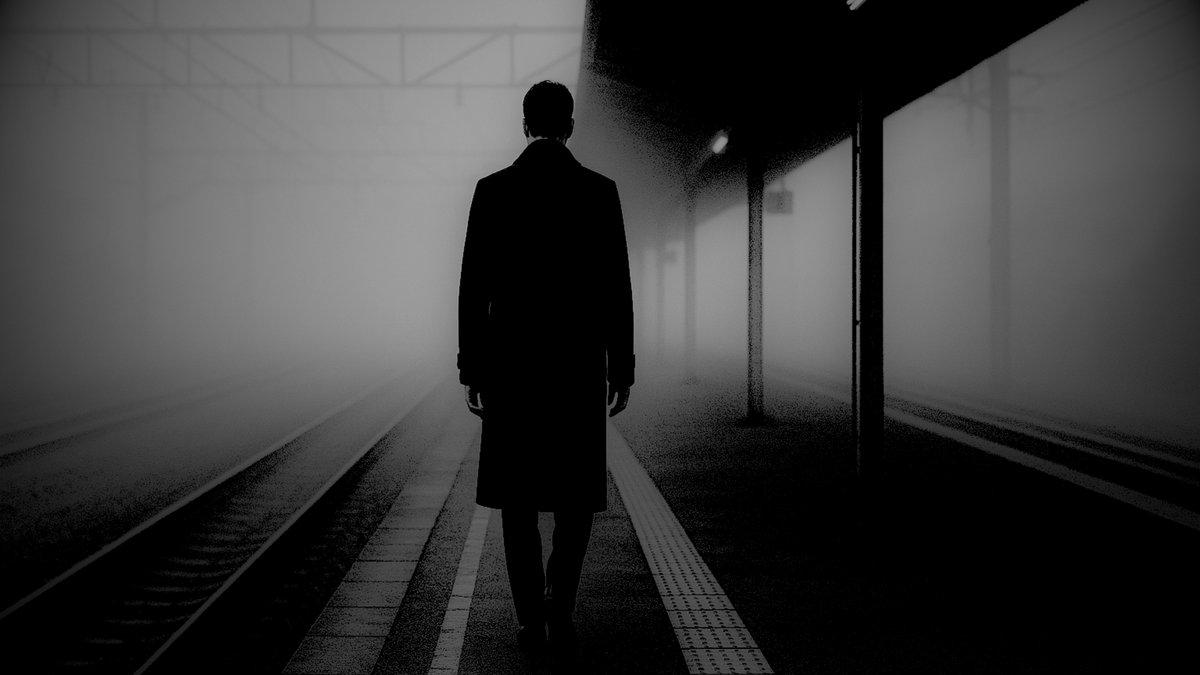
Written by